
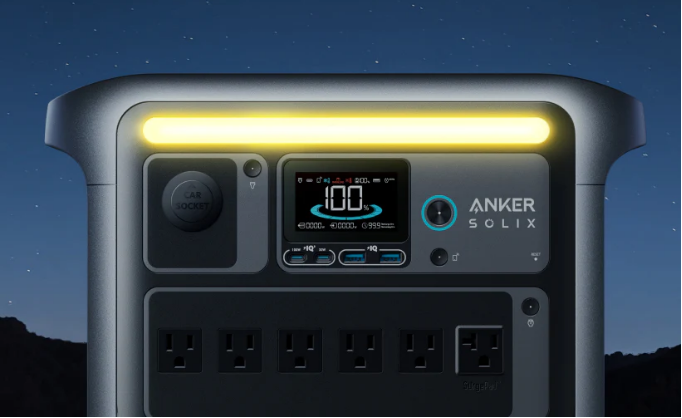
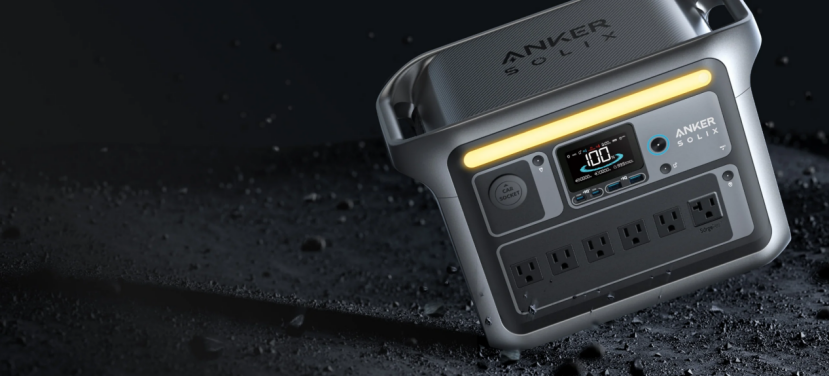
People exploring backup power, camping setups, vanlife living, or emergency preparedness often start with enthusiastic expectations—but also a few misconceptions. A portable power station may look straightforward at first, yet its capacity, output behavior, charging logic, and real-world performance vary widely depending on user habits and device demands. New users frequently misjudge what a power station can realistically power, how long it will last, and how quickly it can recharge. Advanced systems such as the Anker SOLIX F2600 Portable Power Station—featuring a 2,560Wh LFP battery, 2400W continuous power, HyperFlash™ AC input, high solar compatibility, and expansion options—help simplify these learning curves, but understanding core principles remains essential. Clear expectations lead to safer use, better planning, and more satisfying ownership.
The Most Common Misunderstandings About Power Capacity and Output
Users Often Confuse Wattage With Battery Capacity
One of the most frequent misconceptions involves mixing up output power (wattage) with stored energy (watt-hours). New users may assume a 2400W output means the station can run high-demand devices all day, when wattage only reflects how much power the inverter can supply at a given moment. The true runtime depends on battery capacity—in this case, 2,560Wh. For example, a device drawing 1000W will reduce the runtime much faster than expected. Understanding the difference helps prevent overestimating performance during outages or trips. A system like the SOLIX F2600 provides both strong output and high capacity, but knowing how wattage drains stored energy changes how users schedule device usage and set realistic expectations.
Short Bursts of High Power Are Misjudged as Sustainable Loads
Surge power allows appliances with motors or heating elements to start up without tripping protection systems. New users sometimes assume that if a power station can handle the surge, it can also sustain the running load indefinitely. But startup surges are temporary, while running wattage determines long-term feasibility. A blender or microwave may start without issue, but running a high-draw appliance for long periods can deplete the station quickly. The 2800W surge handling of the F2600 gives users flexibility during startup, yet the continuous 2400W rating still defines what the system can maintain over time. Knowing this distinction prevents unrealistic assumptions and extends overall battery life.
Runtime Estimates Are Often Based on Ideal Conditions
Manufacturers provide estimated runtimes, but these estimates rarely reflect real-world conditions. Device inefficiencies, inverter losses, ambient temperature, and simultaneous usage all influence actual performance. New users sometimes believe their station will achieve maximum advertised runtime in every scenario. In practice, conditions vary, and heavy appliances drain faster than expected. Systems like the SOLIX F2600 include app-based monitoring, helping users track consumption in real time and adjust their habits accordingly. When users understand that runtimes fluctuate naturally, they make smarter decisions regarding what to power and for how long.
Misunderstandings About Charging Speed, Solar Use, and Daily Operation
Fast Charging Does Not Eliminate the Need for Planning
High-speed charging technologies such as HyperFlash™ AC input allow the F2600 to refill quickly, but new users sometimes assume this eliminates the need to manage their charging schedule. Fast charging accelerates recovery time, but the user must still consider power availability, energy usage, and battery maintenance. For example, charging from low-voltage sources or under extreme temperatures slows the process. Relying solely on fast charging without understanding these variables may lead to confusion. Proper planning ensures the unit stays ready when needed, especially for travel or emergency preparation.
Solar Input Is Often Overestimated
Solar charging creates major benefits for off-grid living, but many newcomers expect solar panels to deliver full rated input constantly. In reality, sunlight intensity, angle, panel placement, weather, and time of day dramatically affect charging speed. Even with a high solar input capacity—up to 1000W for the F2600—actual performance fluctuates throughout the day. Some users believe a single panel can fully recharge a large battery quickly, yet real-world solar energy production requires proper setup and patience. Understanding this helps avoid frustration and encourages more effective panel positioning and system design.
Users Underestimate the Value of Battery Health and Temperature Control
Battery lifespan and performance depend heavily on temperature, charging style, and load behavior. New users sometimes ignore environment and storage habits, assuming modern batteries require little maintenance. But temperature extremes reduce performance, and deep discharges shorten lifespan. Systems like the SOLIX F2600 portable power station include temperature monitoring and advanced cooling to protect the battery, yet user habits still matter. Keeping the unit shaded, avoiding prolonged 0% states, and storing it at moderate temperatures all improve long-term reliability. Understanding these details helps new owners get the most from their investment.
Conclusion
New users frequently misjudge how power stations work because the relationship between capacity, output, runtime, and charging is more complex than it appears. Confusing wattage with watt-hours, overestimating runtime, assuming unlimited surge capability, or misunderstanding solar performance all contribute to unrealistic expectations. A well-engineered model like the Anker SOLIX F2600 Portable Power Station simplifies many of these challenges through strong output, fast AC charging, solar compatibility, and intelligent monitoring. Still, informed usage remains the key to long-term satisfaction. When users learn how capacity behaves under real loads, how charging varies with conditions, and how battery care influences lifespan, they gain full control over their power system—unlocking safer, smoother, and more confident operation in every environment.